

Multi-platform
Access our systems on any operating system, browser, and device.
Intelligent Powered by ATHENA, ProDIGIQ AI
Automate critical processes and surface risks before they escalate.

Configurable
Tailor the system to meet your unique organizational needs.
System Description
ProDIGIQ’s Safety Management System, ProSafeT, is a comprehensive, AI-powered platform designed to help Air Navigation Services (ANS) manage safety, quality, risk, and compliance. It provides a centralized environment for identifying concerns, evaluating risk, managing operational processes, and driving continuous improvement.
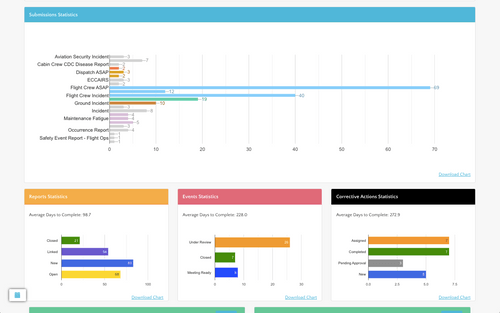
ProSafeT supports the complete safety and quality lifecycle, from initial reporting through investigation, root cause analysis, corrective action, risk assessment, and management of change. Automated workflows guide processes from submission to resolution, while analytics dashboards provide real-time visibility into organizational performance, emerging trends, and potential safety concerns.
ATHENA, ProDIGIQ’s proprietary AI model, is embedded throughout ProSafeT to help streamline safety and quality processes. ATHENA provides intelligent suggestions for areas such as risk assessment, root cause analysis, corrective actions, and trend identification, helping teams reduce manual effort and make more informed decisions. The platform also supports vendors, suppliers, and customer management, helping ANS organizations maintain oversight of external relationships and related safety and quality concerns.
By connecting safety, quality, risk, compliance, and external party management in one platform, ProSafeT helps ANS organizations strengthen oversight, improve accountability, and maintain a proactive approach to safety and quality.
System Overview
Safety Reporting from initial submission through investigation, meetings, corrective actions, and recommendations
Audits, Investigations & Inspections with linked findings, actions, and supporting evidence
Root Cause Analysis & Risk Management to identify underlying causes and assess, monitor, and mitigate operational risks
Management of Change with impact assessment and controlled document revisions
Quality, Compliance & External Party Management to manage requirements, evidence, suppliers, vendors, customers, and related actions
AI-Powered Insights & Analytics with real-time dashboards, alerts, and intelligent suggestions to support safety decisions
Connected & Secure Platform with seamless data interconnectivity, role-based access, and permissions across the organization
Key Benefits
Reduce operational costs while strengthening safety and regulatory compliance
Reduce administrative workload through automated workflows and centralized records
Improve safety through proactive hazard identification and risk mitigation
Strengthening oversight of audits, investigations, and corrective actions
Improve organizational visibility with real-time safety and performance insights
Support continuous improvement through connected safety processes and data
Additional Subject Information
Safety Management Systems (SMS) are fundamental to the safe and resilient delivery of Air Navigation Services (ANS). ANS organizations operate within complex environments where people, technology, procedures, and operations must function together safely. An effective SMS provides the framework to identify hazards, assess operational risk, and maintain effective safety controls.
Safety data is central to this process. Reports, occurrences, investigations, and operational information provide insight into safety performance across the organization. When analyzed systematically, this information can help ANS organizations identify emerging hazards and recurring issues before they develop into more serious events.
Safety must also remain central when operations change. New technology, revised procedures, changes to airspace, and organizational adjustments can affect existing safety controls. SMS provides a structured process to assess these changes and verify that safety controls remain effective.
A mature SMS brings these activities together through safety assurance and continuous improvement. It provides ANS organizations with the visibility, accountability, and structure needed to make informed safety decisions, demonstrate regulatory compliance, and maintain safe operations as the aviation environment evolves.
Elements of a Holistic SMS
Link safety reports, investigations, SRAs, findings, and corrective actions to maintain a connected safety process
Assess risk throughout the safety lifecycle and track initial, target, and residual risk
Apply root cause analysis methods such as 5 Whys, Fishbone, and Bowtie to strengthen mitigation strategies
Verify corrective actions and safety activities to confirm that controls are implemented and effective
Maintain centralized safety information to improve transparency and support organizational decision-making
Sign that an ANS Needs SMS System
Safety information is fragmented across departments and systems
Corrective actions are difficult to track through completion and effectiveness
Related safety events, investigations, findings, and risks are not connected
Lack of trend analysis for different departments
Safety reporting and management reviews rely heavily on manual processes