

Multi-platform
Access our systems on any operating system, browser, and device.
Intelligent Powered by ATHENA, ProDIGIQ AI
Automate critical processes and surface risks before they escalate.

Configurable
Tailor the system to meet your unique organizational needs.
Safety Risk Management Module Details
The Safety Risk Management Module is designed to help Air Navigation Services organizations identify hazards, assess risk, and manage mitigation activities within a centralized environment.
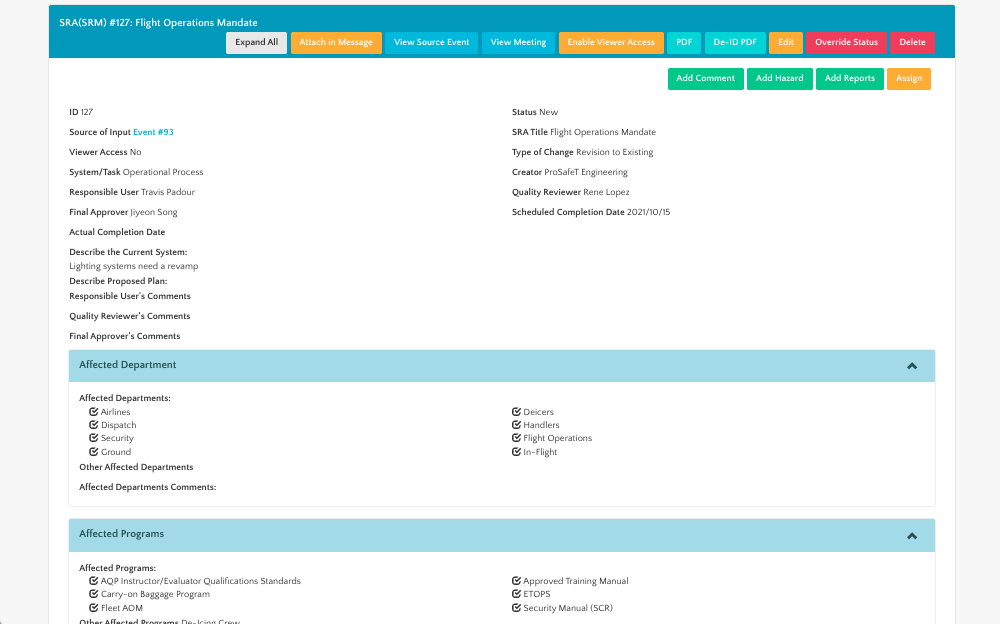
The Module allows safety teams to maintain a comprehensive hazard and risk register, document Safety Risk Assessments, and track the effectiveness of risk controls over time. It also supports baseline, target, and residual risk analysis to provide a clearer view of how risk changes throughout the mitigation process.
ATHENA, ProDIGIQ’s proprietary AI model, helps streamline risk management by providing intelligent suggestions during risk assessment and mitigation activities. The Module also connects with Safety Reporting, Safety Assurance, and other ProSafeT processes so related safety information remains linked throughout the risk lifecycle.
Module Overview
Centralized hazard and risk register with visibility into associated risk levels
Conduct Safety Risk Assessments and track baseline, target, and residual risk
Document mitigation strategies and monitor the effectiveness of risk controls
Use dashboards and analytics to monitor risk trends, priorities, and key safety indicators
Seamless integration with other ProSafeT modules
Key Benefits
Improve visibility into operational and technical risks across the organization
Support more consistent and structured safety risk assessments
Monitor whether mitigation strategies are reducing risk as intended
Connect hazards and risk controls with related safety data across ProSafeT
Additional Subject Information
Safety Risk Management is the part of an SMS that provides a structured process for understanding and controlling risk. It begins with identifying hazards and understanding the conditions in which they exist. The associated risk can then be assessed based on factors such as severity and likelihood.
Risk assessment should not end with the initial rating. Once controls are introduced, organizations need to understand how those measures change the level of risk and whether additional action is required. Tracking baseline, target, and residual risk provides a clearer picture of how effectively a hazard is being managed.
For Air Navigation Services organizations, hazards may arise from changes in procedures, technical systems, staffing, airspace, or other operational conditions. A consistent SRM process helps ensure these risks are evaluated before they affect the safe delivery of services.