

Multi-platform
Access our systems on any operating system, browser, and device.
Intelligent Powered by ATHENA, ProDIGIQ AI
Automate critical processes and surface risks before they escalate.

Configurable
Tailor the system to meet your unique organizational needs.
Safety Assurance Module Details
The Safety Assurance Module is designed to help Air Navigation Services organizations conduct and manage Audits, Evaluations, Investigations, and Inspections within one centralized platform.
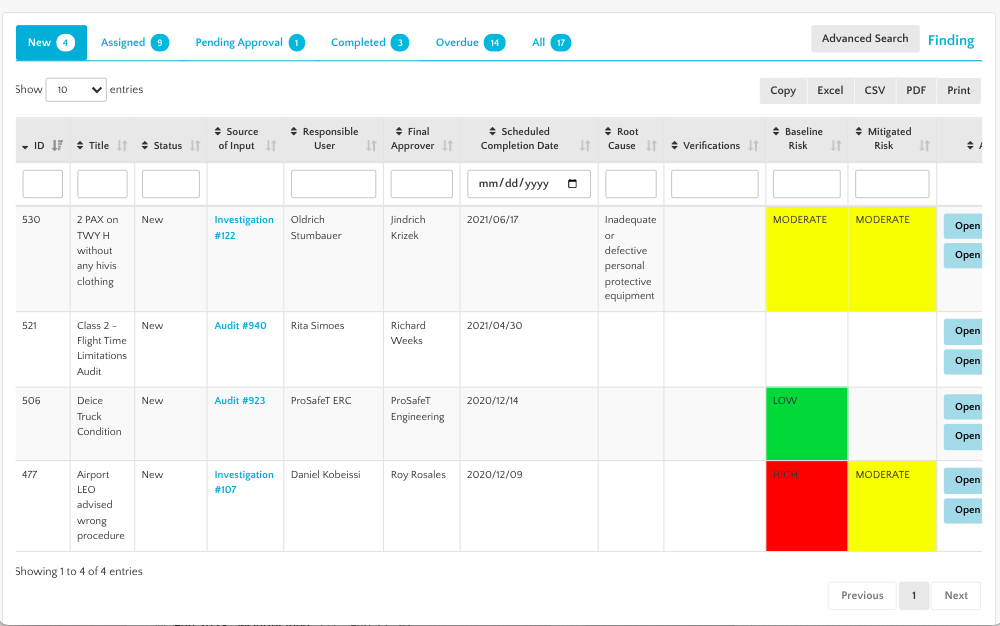
Each activity can be connected to Findings, Corrective Actions, and Recommendations, giving safety and quality teams a structured way to document issues and track follow-up through completion. Configurable workflows and role-based access allow organizations to align the process with internal SMS and QMS requirements.
ATHENA, ProDIGIQ’s proprietary AI model, helps streamline safety assurance activities by providing intelligent suggestions for root cause analysis, corrective actions, and review of findings.
Module Overview
Conduct and manage Audits, Evaluations, Investigations, and Inspections
Configure and customizable checklists and templates
Perform root cause analysis using tools such as Fishbone and Bowtie
Link Findings to Corrective Actions and Recommendations and monitor follow-up through dynamic dashboards
Seamless integration with other ProSafeT modules
Key Benefits
Improve oversight of safety and quality activities across the organization
Reduce manual effort in managing audits, investigations, and follow-up actions
Strengthen accountability by tracking Findings and Corrective Actions through closure
Improve visibility into recurring issues and areas requiring additional attention
Additional Subject Information
Safety Assurance is the mechanism an SMS uses to determine whether safety controls remain effective once they are implemented. For Air Navigation Services organizations, this requires more than reviewing individual events. It involves continuously evaluating operational performance, identifying changes in risk, and verifying that corrective measures are producing the intended result.
Audits, evaluations, investigations, and inspections each provide a different view of safety performance. Together, they help organizations identify systemic issues, validate compliance with established processes, and determine whether existing controls remain appropriate as operations evolve.
Effective investigations also require structured root cause analysis. Techniques such as Fishbone and Bowtie help teams move beyond immediate causes and examine the broader conditions that contributed to an event, including weaknesses in controls and potential escalation pathways.