

Multi-platform
Access our systems on any operating system, browser, and device.
Intelligent Powered by ATHENA, ProDIGIQ AI
Automate critical processes and surface risks before they escalate.

Configurable
Tailor the system to meet your unique organizational needs.
Safety Promotion Module Details
ProDIGIQ’s Safety Management System, ProSafeT, includes a Safety Promotion Module designed to help Air Navigation Services organizations strengthen safety awareness and improve familiarity with organizational safety policies.
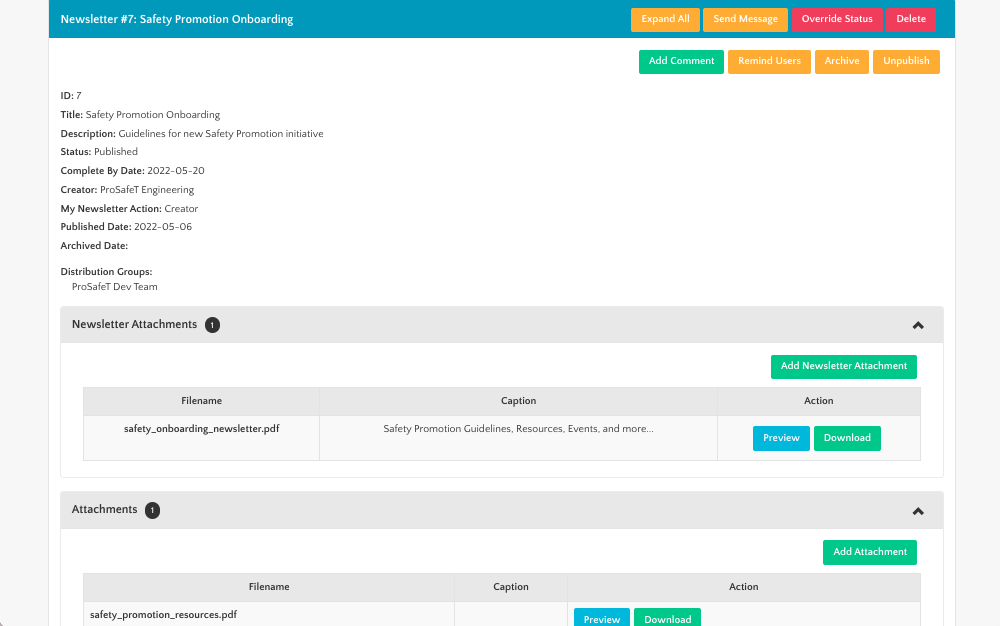
The Module automates the distribution of safety newsletters, surveys, policies, lessons learned, and other communications through a user-friendly interface. Users can attach files, create custom or standard checklists, select distribution groups, and establish target completion dates.
A centralized dashboard provides news alerts, calendar visibility, and key performance statistics. Role-based privileges and access rules help organizations manage responsibilities across different user groups.
Module Overview
Create and distribute newsletters, surveys, and other safety communications
Build custom or standard checklists and attach supporting files
Select targeted distribution groups and establish completion deadlines
Monitor alerts, calendar activity, and key performance statistics through a dynamic dashboard
Key Benefits
Streamline the management of safety communication and awareness initiatives
Increase participation across operational and technical teams
Reinforce safety policies, lessons learned, and organizational expectations
Support a stronger and more consistent safety culture across the organization
Additional Subject Information
Safety Promotion is one of the four core components of an effective Safety Management System. The FAA identifies training, communication, safety awareness, competency, and the sharing of lessons learned as important elements of Safety Promotion. ICAO similarly emphasizes that Safety Promotion should strengthen technical competence and support a positive safety culture throughout the organization.
For Air Navigation Services organizations, Safety Promotion helps translate the broader SMS into everyday operational behavior. Personnel need to understand not only safety policies, but also how lessons learned, changes in procedures, and emerging risks affect the work they perform.
Effective safety communication should therefore be continuous rather than limited to periodic training. Information from events, investigations, audits, risk assessments, and other safety processes can be used to reinforce expectations and improve awareness across operational and technical teams. ICAO specifically recognizes communication and training as central to maintaining an effective SMS and strengthening safety culture.
A mature Safety Promotion program also creates a feedback loop between the organization and its workforce. When personnel understand the rationale behind safety initiatives and see how reported concerns lead to action, it strengthens trust in the SMS and encourages greater participation in safety activities.