

Multi-platform
Access our systems on any operating system, browser, and device.
Intelligent Powered by ATHENA, ProDIGIQ AI
Automate critical processes and surface risks before they escalate.

Configurable
Tailor the system to meet your unique organizational needs.
Safety Risk Management Module Details
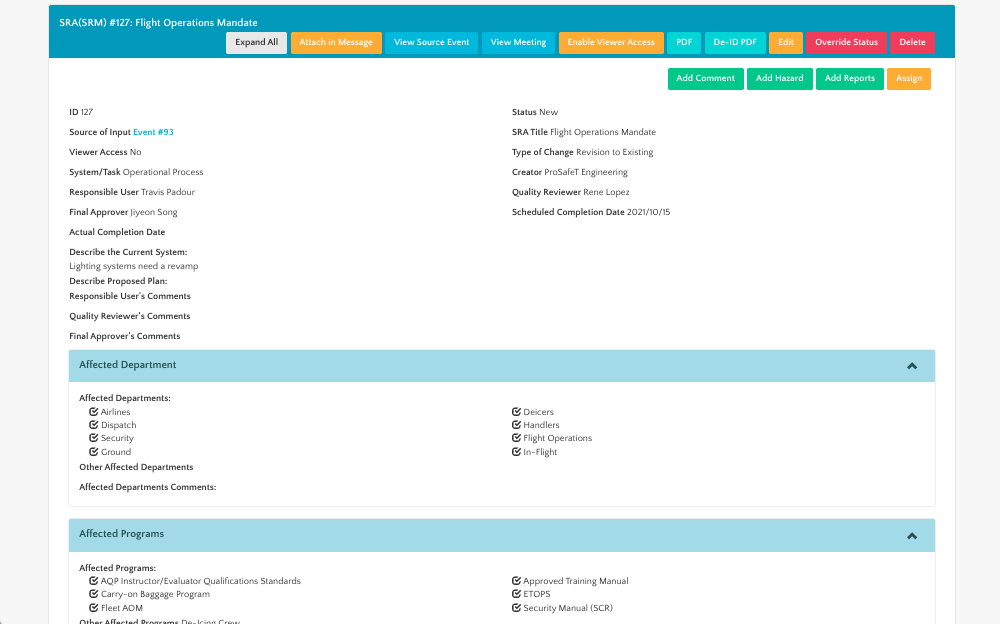
The Safety Risk Management Module streamlines safety hazard management, enabling airlines to identify, assess, and mitigate operational risks. Airlines can document hazards, associated risks, safety risk assessments, and risk controls within a centralized system. Dashboard analytics provide visibility into Key Performance Indicators (KPIs) and operational risk trends, while supporting oversight of risk controls and their effectiveness in mitigating identified risks. The Module natively integrates with the Safety Reporting, Safety Assurance, and Safety Promotion Modules, connecting safety data and streamlining communication throughout the risk assessment process.
Module Overview
Centralized safety risk management processes
Hazard and risk register for visibility of all hazards and associated risk levels
Process to conduct safety risk assessments and perform baseline and subsequent risk analysis
Dynamic dashboard with drill-down capability that delivers urgent information, key deadlines, and relevant statistics in easy-to-read visuals
Key Benefits
Increase oversight of operational hazards, risks and root causes
Monitor effectiveness of mitigation strategies and risk controls for continuous improvement
Improve airline safety by proactively detecting and addressing safety issues
Enhance safety communication with seamless data sharing through full integration with other ProSafeT modules
Additional Subject Information
One of the four key components of an aviation Safety Management System (SMS) is Safety Risk Management (SRM). SRM focuses on identifying safety hazards, assessing associated risks, and establishing controls to mitigate those risks. A formal SRM process includes describing the system, identifying hazards, analyzing and assessing risk, and implementing risk controls. The FAA explains that SRM is used to determine whether new or revised risk controls are needed based on the assessment of acceptable risk.
Enterprise safety risk management software can streamline and automate the SRM process, from hazard identification and risk assessment through mitigation and ongoing monitoring. It provides airlines with the tools needed to conduct safety risk assessments, implement and monitor risk controls, and manage risk information within a centralized system. By increasing visibility into operational risks, the system enables organizations to trace hazards to their underlying causes and identify opportunities for effective mitigation. When integrated with the broader SMS, safety risk management software connects risk data with other safety processes, providing a more comprehensive and holistic view of an airline’s safety performance.