

Multi-platform
Access our systems on any operating system, browser, and device.
Intelligent Powered by ATHENA, ProDIGIQ AI
Automate critical processes and surface risks before they escalate.

Configurable
Tailor the system to meet your unique organizational needs.
MILOS Details
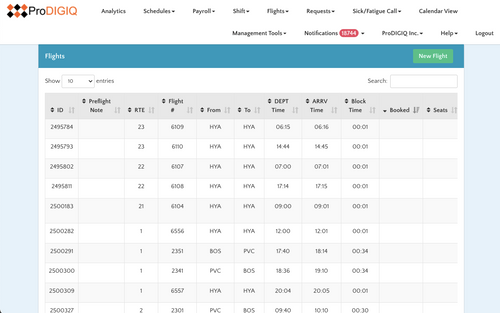
ProDIGIQ’s Flight Scheduling System (MILOS) is an intuitive software for creating and managing robust flight schedules. MILOS streamlines flight scheduling with configurable and integrated schedule views, built-in business and compliance rules, and comprehensive reporting capabilities. This maximizes resource and aircraft utilization, ultimately reducing operational costs and increasing revenue.
MILOS allows users to manage flight schedules through a user-friendly Schedule Builder. The Schedule Builder provides drag and drop features which allows users to effectively build daily, monthly and annual schedules through an intuitive graphical interface. Flight schedules will be visible through three linked schedule views—the Master, Station and Grid views. The integration of these views allows for changes made in any individual view to be automatically reflected in all three views. With built-in business and compliance rules, MILOS automatically alerts users of conflicts and discrepancies within the schedule. MILOS has the capability to provide flight details in a variety of formats, such as an integrated data feed, and provides insightful operational data through advanced reporting.
System Overview
Manage flight scheduling process effectively
Generate standard and custom reports for easy retrieval of pertinent system data in a variety of formats
Build daily, monthly and annual flight schedules using an intuitive graphical interface
Access an integrated platform for real-time data sharing and elimination of duplication of efforts
Key Benefits
Create bid lines seamlessly with integrated Flight Operations System (NAXOS)
Use a simple and intuitive flight scheduling software with user-friendly interface based on latest web technologies
Adjust routings to accommodate changes made to the schedule
Link or unlink flight legs
Easily change times, dates, frequency or any information in a flight leg
View conflicts and discrepancies when certain criteria are not met, such as stations not matching or when times are below minimums
Streamlined flight scheduling process for reduction of labor and cost
Additional Subject Information
Flight schedules are the backbone of flight operations, yet flight scheduling remains one of the most challenging planning activities for operations teams. Flight scheduling is a complex process as a flight schedule must be created in compliance with a multitude of operational and commercial constraints. Additionally, flight schedules are planned well in advance but have to be updated frequently to accommodate real-time disruptions, such as weather conditions or incidents, as they arise. These disruptions also affect operators' On-Time Performance (OTP). A flight is considered "on time" if it departs or arrives within 15 minutes of the scheduled time shown in the operators' Computerized Reservations Systems (CRS), according to the U.S. government's Bureau of Transportation Statistics.
Intuitive flight scheduling software is essential to efficient flight operations as it offers a flexible solution to create robust schedules that comply with all constraints and rules and can be quickly adjusted to accommodate unexpected circumstances. Flight scheduling software can also aid users in tracking and improving On-Time Performance (OTP) for increased customer satisfaction. Operators often use OTP as an important operational measure of schedule reliability. A robust flight scheduling system has extensive reporting capabilites, allowing users to collect and analyze data for increased insights for future planning. A comprehesive flight scheduling software can aid users in increasing operational efficiency, maximizing aircraft utilization and profitability, and meeting market demands.
Signs That Flight Scheduling System is Needed
Laborious and time consuming flight scheduling process
No system to track and provide insights to improve On-Time Performance (OTP)
Cumbersome process to change flight schedules
Difficulty in keeping track of business and compliance rules while building flight schedules